ASTi CommCheck™ Horizon Air Solution
Customer
Alaska Air Group, Horizon Air Maintenance Group, Portland International Airport (PDX)
Application
Horizon Air is using CommCheck™ to train aircraft maintenance crew in the proper phraseology and procedures to use when communicating with ground control.
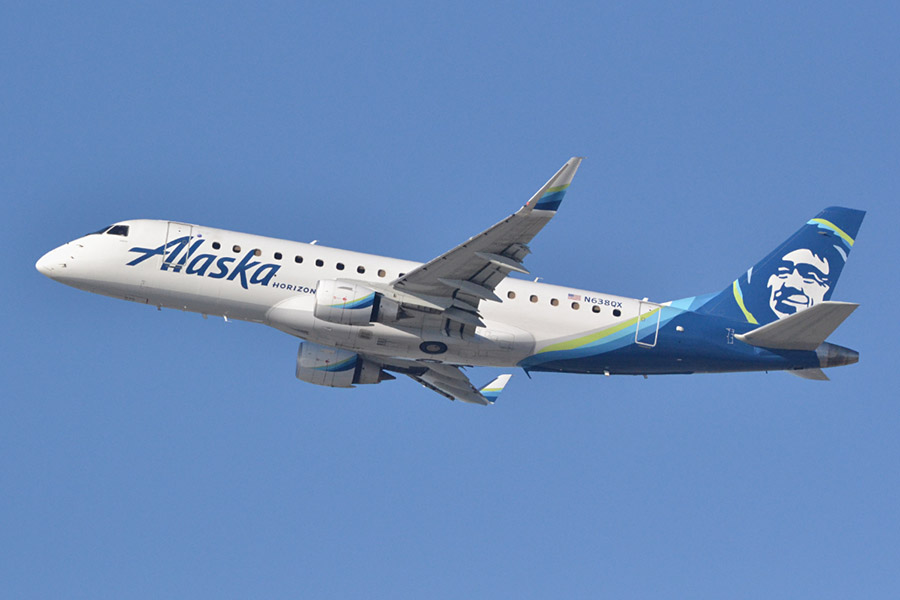
Photo credit: Greg Gayden flickr.com/photos/greggayden/53488788597/
Challenges
&
Solutions
The challenge requirements are listed in blue; ASTi's applicable components are
Photo credit: Greg Gayden flickr.com/photos/greggayden/53488788597/
Teach ATC Radio Comms
PDX is the primary maintenance base for Horizon Air, and aircraft need to be moved between gates, ground run-up enclosures (GREs) and hangars for routine maintenance. This requires effective radio communication between whoever is moving the aircraft and ground controllers in the tower.
Many airlines schedule and pay certified pilots to taxi the aircraft between the gates and maintenance areas, but that is not the best use of pilot time or airline finances. The maintenance crew seems like the next logical choice, but they usually have little to no radio training. This prevents the crew from being able to confidently communicate over the radio with ground control and safely move aircraft around the airport.
CommCheck helps Horizon Air solve these problems by teaching the maintenance crew the correct way to communicate with controllers in the tower. They learn to request aircraft movement, receive instructions from ground control, and respond appropriately just as professional pilots do.
Familiarize Crew with Procedures, Environment
Horizon Air curriculum developers built 20 different scenarios for this training effort. Each unique training situation teaches the student how to properly make requests of ground control, what types of responses to expect, and what information to extract from controllers’ instructions. CommCheck helps the crew learn how to be effective participants in the radio communications environment to taxi aircraft, avoid restricted areas, and safely cross runways between locations.
CommCheck’s multimedia capabilities allow the scenarios to include images and video to show trainees what their position at the airport looks like at various points along their designated path. This visual element not only helps the crew become familiar with the airport layout, but also reinforces when to issue the next request or response to ground control.
Offer Flexible Training Environment
CommCheck has built-in scenario creation tools that allow curriculum developers to construct custom training storylines specific to their airline procedures, aircraft, and airports. ASTi engineers can assist with curriculum creation, but CommCheck is designed to allow customers to easily develop courses on their own.
And as a cloud-based service, CommCheck is available for training using computer lab workstations as well as personal devices like laptops, tablets or phones. Students can run through training sessions any time, anywhere.
Measure Crew Readiness
During instruction, trainees are shown accuracy scoring each time they make a radio transmission. If the scenario is created to account for specific events (e.g., use a callsign every transmission), it alerts the student if they are accidentally omitted. An overall score and training transcript are provided upon completing each scenario.
Summary scoring is also available for curriculum developers, course instructors, and administrators. CommCheck can also integrate with learning management systems, if desired.